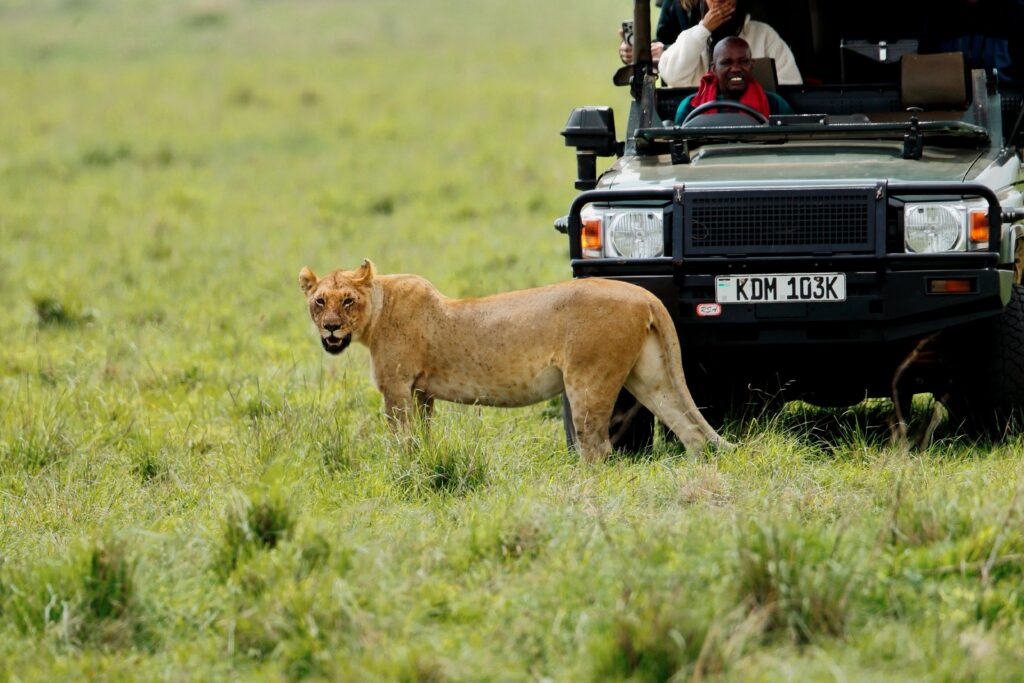
There’s a particular kind of quiet right before a lion roars that you don’t get anywhere else, the whole safari vehicle just goes still. Masai Mara isn’t only about the Great Migration, though that’s what most people fly in for; it’s the everyday stuff, a leopard dozing in a tree at 4pm, an ordinary afternoon with thirty elephants in view — that actually stays with you.
If you’re planning a trip, the two things that’ll shape your whole budget and itinerary are when you go and what the entry fees actually are right now, because both changed in 2026. Here’s everything you need to plan it properly.
Best Time to Visit Masai Mara
Short answer: July to October for the Great Migration river crossings, January to June if you want lower costs and fewer crowds with still-excellent wildlife.
High season: July – October
This is when the wildebeest migration arrives from the Serengeti, and it’s the reason Masai Mara is famous in the first place. Millions of wildebeest and zebra cross the Mara River, and the crocodiles are waiting. It’s genuinely one of the most dramatic wildlife events on the planet — but you’ll pay for it, lodges book out months in advance, and game drives can feel crowded near the main crossing points.
Low season: January – June
March to May brings the long rains, which means muddy roads and a few rained-out game drives, but also newborn animals, dramatically lower lodge prices, and a landscape that turns properly green. January and February sit in a nice gap — decent weather, good resident wildlife viewing, and you’ll often have a sighting almost to yourself.
The honest trade-off
If river crossings are the whole point of your trip, you need July–October and you need to book early. If you just want exceptional Big Five wildlife without the crowds or the price spike, the low season delivers almost everything except the crossings themselves — and at half the park fee.
Masai Mara Entry Fees 2026 (Updated)
This is the part that catches people out, because the fee structure changed for 2026 and it’s seasonal, not flat.
| Visitor Category | Jan – Jun 2026 | Jul – Dec 2026 |
|---|---|---|
| Non-resident adult | $100/day | $200/day |
| Non-resident child (9–17) | $50/day | $50/day |
| Child (8 and under) | Free | Free |
| East African resident adult | KES 2,500/day | KES 5,000/day |
| Kenyan citizen adult | KES 1,500/day | KES 3,000/day |
A few important details that most guides skip:
- Tickets are valid for a 12-hour window, 6:00am to 6:00pm. If you’re staying outside the reserve, you pay this every day you enter.
- Departing by road? You need to exit by 10:00am on your last day, or you’ll be charged for an extra full day.
- Departing by air? Same rule applies — be at the airstrip by 10:00am.
- Fees are billed by calendar date, not booking date. If your trip spans June 30 into July 1, expect the higher rate to apply for that second day. Rangers don’t make exceptions for this.
- Vehicle fees, balloon safari landing fees, and horse-riding fees are all charged separately, on top of the personal entry fee.
Practical tip: Most all-inclusive safari packages bundle the park fee into the price already — but always confirm this with your operator before booking, especially if your trip is fly-in only.
How to Get There
Most travelers fly into Nairobi first, then either:
- Take a short scheduled flight (around 45 minutes) directly into one of the Mara’s airstrips, or
- Drive 5–6 hours from Nairobi, which is cheaper but a long day on rough roads toward the end
If you’re doing a multi-park Kenya trip, flying between parks saves a huge amount of time, even though it costs more than driving.
Tips for a Better Trip
- Stay inside the reserve if you’re doing multiple days. It avoids paying separate entry fees every morning and gets you closer to the wildlife at dawn, which is when the best sightings happen.
- Choose a private conservancy if you want more than game drives. Areas like Mara North or Naboisho allow night drives and walking safaris, which the main reserve doesn’t.
- Bring US dollars in good condition. Some gates still take cash, but torn or pre-2006 bills are often rejected.
- Pack for both heat and cold. Mornings in an open vehicle are surprisingly cold; afternoons are not.
Frequently Asked Questions
Is Masai Mara worth visiting outside migration season?
Yes — the resident wildlife (lions, leopards, elephants, the Big Five) is there year-round. You’re trading the river crossing spectacle for lower costs and quieter game drives.
Do park fees include my safari vehicle and guide?
No, those are arranged separately through your tour operator or lodge. The entry fee is strictly the per-person park access charge.
How many days should I plan for?
Three days is the realistic minimum to get a proper feel for the reserve and a couple of full game drives. Five or more if you want to add a conservancy stay.